
Volunteering
Volunteering in Tanzania
Placements with local hosts we know, arranged carefully and priced openly.
TANZURI can arrange volunteer placements in Tanzania for travellers who want to spend part of their trip doing something useful. We work from Arusha, Dodoma and Dar es Salaam, and we can place volunteers in schools and community projects, in conservation and tree-planting work, in wildlife and environmental projects, in community construction and renovation, and in English conversation and skills sharing. Where a placement calls for a professional qualification — anything medical, above all — we only place people who hold it.
Every placement is with a local host we have met and visited. That matters more than it sounds: it means somebody from our team has sat down with the people you will work alongside, seen where you would sleep, and agreed in advance what you will actually do each day. While you are here you have a local coordinator and a Tanzanian phone number that is answered at any hour. If something is not working — the accommodation, the placement, your health — we want to hear about it on the day, not in a review afterwards.
We are also honest about what volunteering can and cannot do. Short placements work best when they support something a community is already doing and already leading, rather than substituting for it. A volunteer should never take work that a Tanzanian would otherwise be paid to do, and a few weeks of good intentions is no replacement for trained local staff. The most useful volunteers we place tend to be the ones who arrive ready to assist, to learn, and to share a specific skill — and who accept that the project belongs to the community, not to them.
Placements
What you could do
We match what you can offer with what a host actually needs — and say so honestly when a placement is not a good fit.
Teaching and classroom support
Assisting a local teacher in a primary or secondary school or a community learning centre: supporting reading and English, helping with small groups, preparing materials and running activities. You support the teacher; you do not replace them, and you do not run a classroom alone. Anyone working with children needs a police or criminal record check from their home country, and placements are supervised. Term dates and school holidays affect availability, so tell us your dates early.
Health and community awareness support
For qualified and registered health professionals only: supporting clinics and community health education on subjects such as hygiene, nutrition, maternal health and first aid. We will ask to see your qualification and registration, and your scope of practice is agreed with the host in advance. People without a health qualification are very welcome to help with awareness activities, logistics and administration — never with clinical care.
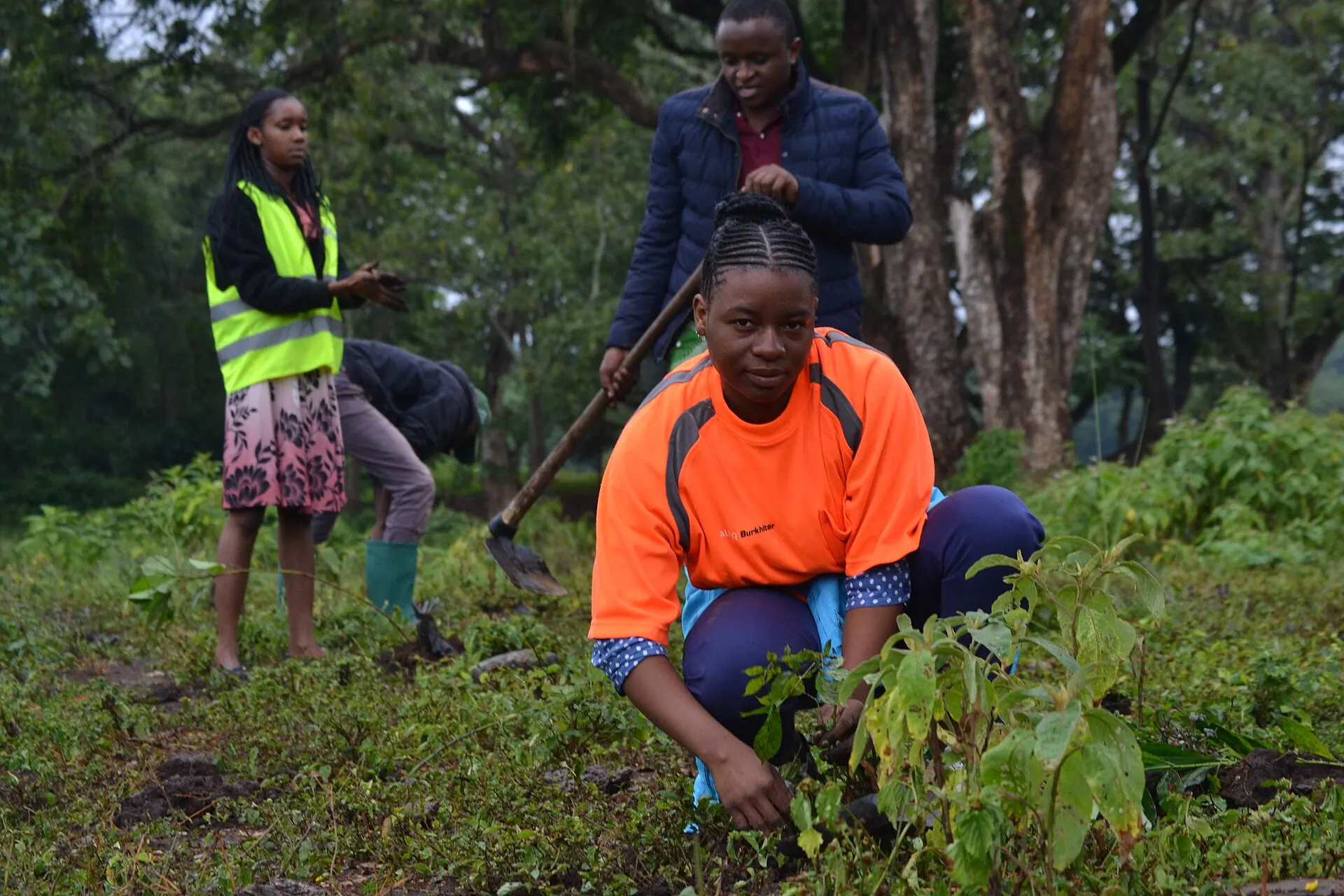
Conservation and tree planting
Practical environmental work with community groups and nurseries: raising seedlings, planting and caring for trees, soil and erosion work, and rubbish and plastic clean-ups. It is outdoor, physical and genuinely useful, and the follow-up care matters more than the planting day itself, so we favour hosts who can show what survived from last season.
Wildlife and environmental projects
Support roles with conservation and environmental education projects — habitat work, data recording, visitor and school education, and helping with awareness campaigns. Be realistic about what this involves: responsible wildlife projects do not offer hands-on contact with wild animals, and we will not arrange placements that let volunteers handle or pose with them.
Community construction and renovation
Helping with building and repair work on a school, clinic or community building — painting, repairs, water and sanitation improvements, furniture. Work is led by local builders who are paid for their skilled labour; volunteers assist and cover materials through the host contribution. No experience is needed, but the days are hot and physical.
English conversation and skills sharing
Conversation practice and skills workshops with young people, women’s groups, small business owners or hospitality staff: spoken English, computer basics, bookkeeping, marketing, first aid, sport or music. This is often where a short stay does the most good, because you are sharing something specific rather than filling a role. Tell us what you actually know how to do and we will look for a host who wants it.
How we keep you safe
Hosts we have met and visited
We only place volunteers with organisations our own team has visited in person and continues to visit. We meet the people running the project, see the work and the accommodation, and agree in writing what the placement involves.
A local coordinator and a 24/7 Tanzanian number
You have a named coordinator in Tanzania and a phone number answered at any hour, day or night: +255 768 519 044, on phone and WhatsApp. If you need us at three in the morning, call.
Orientation on arrival
Before you start, we run through the practical things in person: how the project works and who is in charge, local customs and dress, money and mobile data, transport, useful Kiswahili, what to do if you feel unwell, and what to do if something at the placement concerns you.
Accommodation we have checked
You stay in a host family, volunteer house or guesthouse that we have inspected ourselves — looking at security, lockable rooms, clean water, sanitation and how food is prepared. We will tell you honestly what standard to expect before you book.
Airport pick-up and transfers
We meet you at the airport and take you to your accommodation, and we arrange your transport to and from the placement. You are not expected to find your own way anywhere on the first day.
Health, insurance and clear expectations
We advise on vaccinations and malaria precautions to discuss with your own doctor, require travel and medical insurance that covers volunteering, and send you a written description of the placement, the accommodation and the daily routine before you commit, so nothing about it is a surprise.
How it works
- 1
1. Tell us about yourself
Write to bookings@tanzurisafari.com or message +255 768 519 044 with your skills and qualifications, the dates you have available, how long you can stay and the kind of work that interests you. If you are not sure what would be useful, say so — that is a normal place to start.
- 2
2. We propose placements and costs in writing
We come back with one or more hosts that fit, a description of what you would actually be doing each day, the accommodation, and an itemised quotation. Transparent pricing you can trust: you see what each part costs, including the host contribution, and there are no hidden extras.
- 3
3. You confirm and we arrange the logistics
Once you are happy, we confirm the placement with the host and help you with the practical steps: an invitation or supporting letter where the host provides one, advice on the correct visa or permit class, insurance requirements, the police check where children are involved, flights and airport pick-up.
- 4
4. Orientation on arrival
We meet you at the airport, settle you into your accommodation and give you a proper orientation before the first day at the placement — including an introduction to the host and your coordinator, so you know exactly who to ask for.
- 5
5. Support throughout, and a trip afterwards if you want one
Your coordinator checks in through your stay and is reachable at any hour. Many volunteers add a safari or a few days on the coast at the end, and we can plan that for you on the same itemised basis — Ngorongoro and the Serengeti from Arusha, or Zanzibar from Dar es Salaam.
Responsible volunteering
Our rules, and why they matter
Volunteering can help or it can harm. These are the lines we hold, even when we are asked not to.
- We do not place volunteers in orphanages or residential children’s homes, and we will not make an exception. Short-term volunteering in residential care is widely recognised as harmful: a stream of visiting strangers disrupts the stable attachments children need, and international demand has been shown to draw children into institutions who have living families. Children need consistent, qualified local carers and, wherever possible, families — not visitors. If supporting vulnerable children matters to you, we can suggest placements that work with children through schools and community programmes while they live at home.
- Volunteers must never displace paid local work. Skilled jobs — teaching, building, driving, cooking, clinical care — belong to Tanzanians who are paid to do them. Volunteers assist, share specific skills and cover costs; they do not replace a salary.
- Anyone whose placement involves contact with children must provide a police or criminal record check from their home country, and those placements are supervised by local staff at all times. Volunteers are not left alone with children, and this protects everyone.
- Only qualified, registered professionals do medical or clinical work, within a scope of practice agreed with the host in advance. Practising beyond your training is not an option here any more than it is at home.
- Ask before photographing anyone, explain what the photo is for, and accept no as an answer. Do not post photographs of children on social media, in fundraising material or anywhere else — not even with a first name. It is their privacy, not your content.
- Be realistic about a short stay. Two or four weeks is well suited to sharing a skill, supporting a team and learning a great deal yourself; it is not long enough to run a project or to become someone a child depends on. The best volunteers leave behind something the community can carry on without them.
Good to know
- The minimum stay is typically two weeks, to be confirmed. Longer placements are usually more useful to the host and more rewarding for you, and some projects ask for a month or more.
- Your visa must match what you are doing. Tanzania requires the correct permit or visa class for volunteering, and a standard tourist visa is generally not the right one. We advise on the correct class and on any supporting letter the host provides, but the requirements and fees must be confirmed with the Tanzanian immigration authorities or a Tanzanian mission before you travel — to be confirmed.
- Travel and medical insurance is required, and it must cover volunteering activities as well as anything else you plan to do, such as a safari or a trek. Please send us a copy before you arrive.
- Costs cover the host contribution, accommodation, meals where stated, airport pick-up, orientation and our coordination. Everything is quoted individually and itemised, with no hidden fees — and you can see what goes to the host.
- A little Kiswahili goes a long way. Habari, asante, karibu and pole pole will be appreciated from your first morning, and your coordinator will teach you more during orientation.
Costs are quoted individually and itemised, like everything else we plan. About TANZURI
Questions
Tell us what you’d like to do
Your skills, your dates and how long you can stay. We’ll come back with placements that genuinely need what you can offer, and an itemised cost.