Zanzibar & Coast
Kilwa Kisiwani
The ruins of a medieval Swahili city-state that once traded gold across the Indian Ocean.
UNESCO World Heritage Site — Ruins of Kilwa Kisiwani and Ruins of Songo Mnara — inscribed on the UNESCO World Heritage List in 1981. The site was placed on the List of World Heritage in Danger in 2004 and removed from it in 2014 following conservation work.
- Established
- A trading settlement from around the 9th century, at its height in the 13th–15th centuries
- Best for
- Swahili coast history and archaeology, well away from the tourist trail
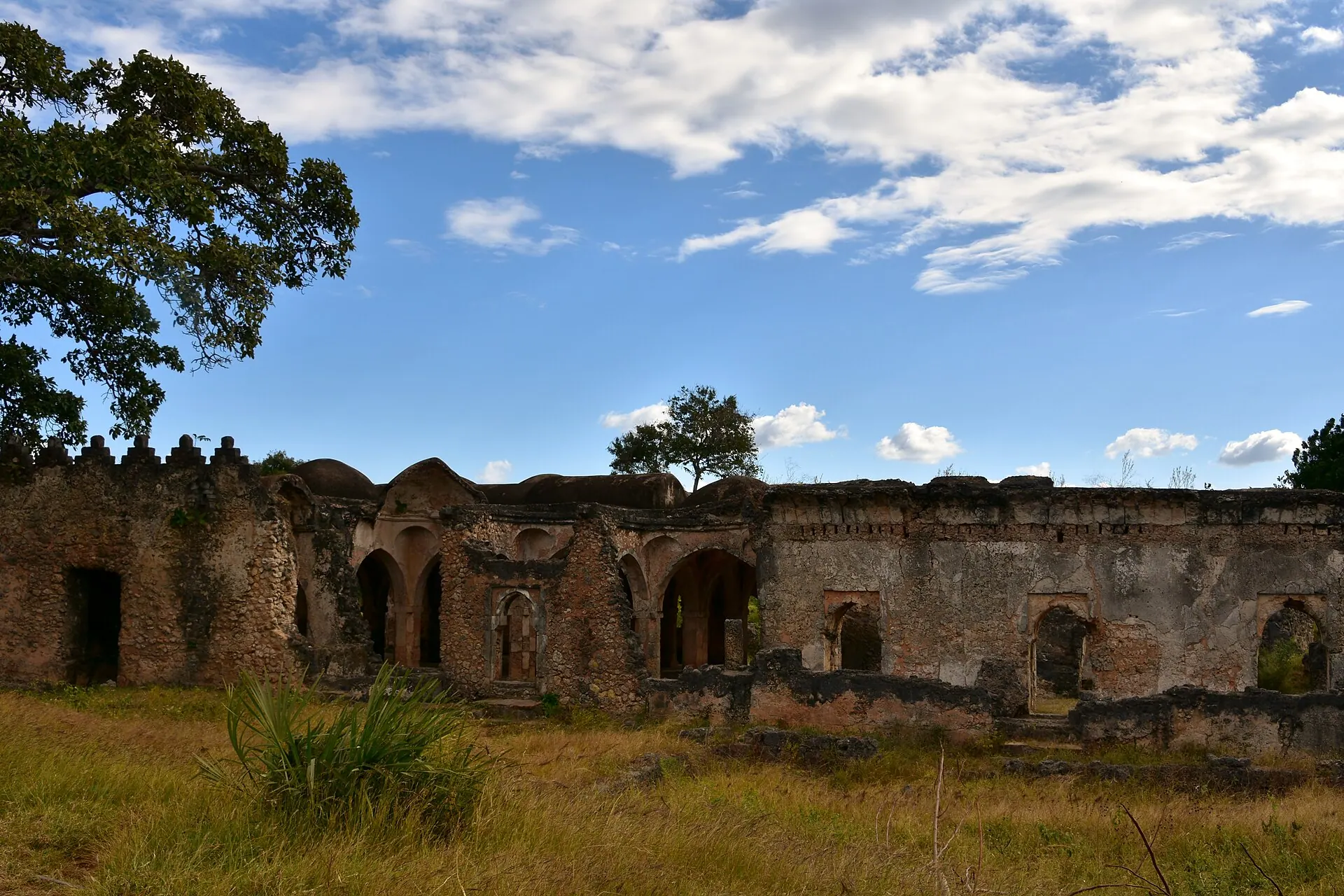
From around the eleventh century, Kilwa Kisiwani grew into one of the most powerful trading cities on the East African coast. Its merchants controlled the trade in gold coming north from Sofala, in what is now Mozambique, and exchanged it for cloth, porcelain and glass carried on the monsoon winds from Arabia, Persia, India and China. Kilwa minted its own coins, and pottery shards from as far away as China still turn up in the sand.
The traveller Ibn Battuta stopped here in the fourteenth century and described it as one of the finest cities he had seen. Its wealth is written into the ruins: the Great Mosque, with its coral-stone columns and domed and vaulted roof, is one of the most remarkable early mosques in sub-Saharan Africa, while Husuni Kubwa — a palace and warehouse complex on the cliff above the harbour, with an octagonal bathing pool and more than a hundred rooms — was built as the city approached its height. Portuguese forces sacked and occupied Kilwa in the early sixteenth century, and the city never fully recovered; the later Gereza fort by the shore reflects that turbulent afterlife.
Today Kilwa Kisiwani is a quiet island village, and visiting feels nothing like visiting a monument. You cross from Kilwa Masoko in a small boat, walk among baobabs and roofless coral-stone walls with a local guide, and often have the whole site to yourself. The nearby ruins of Songo Mnara, on another island, are included in the same World Heritage listing and are usually visited by boat on the same trip.

Highlights
- The Great Mosque, one of the earliest and most impressive surviving mosques in sub-Saharan Africa
- Husuni Kubwa, the cliff-top palace and warehouse complex above the old harbour
- The Gereza, the fort by the landing beach reflecting Portuguese and Omani periods
- Songo Mnara, a second ruined town on a neighbouring island, part of the same listing
- A UNESCO World Heritage Site that receives very few visitors
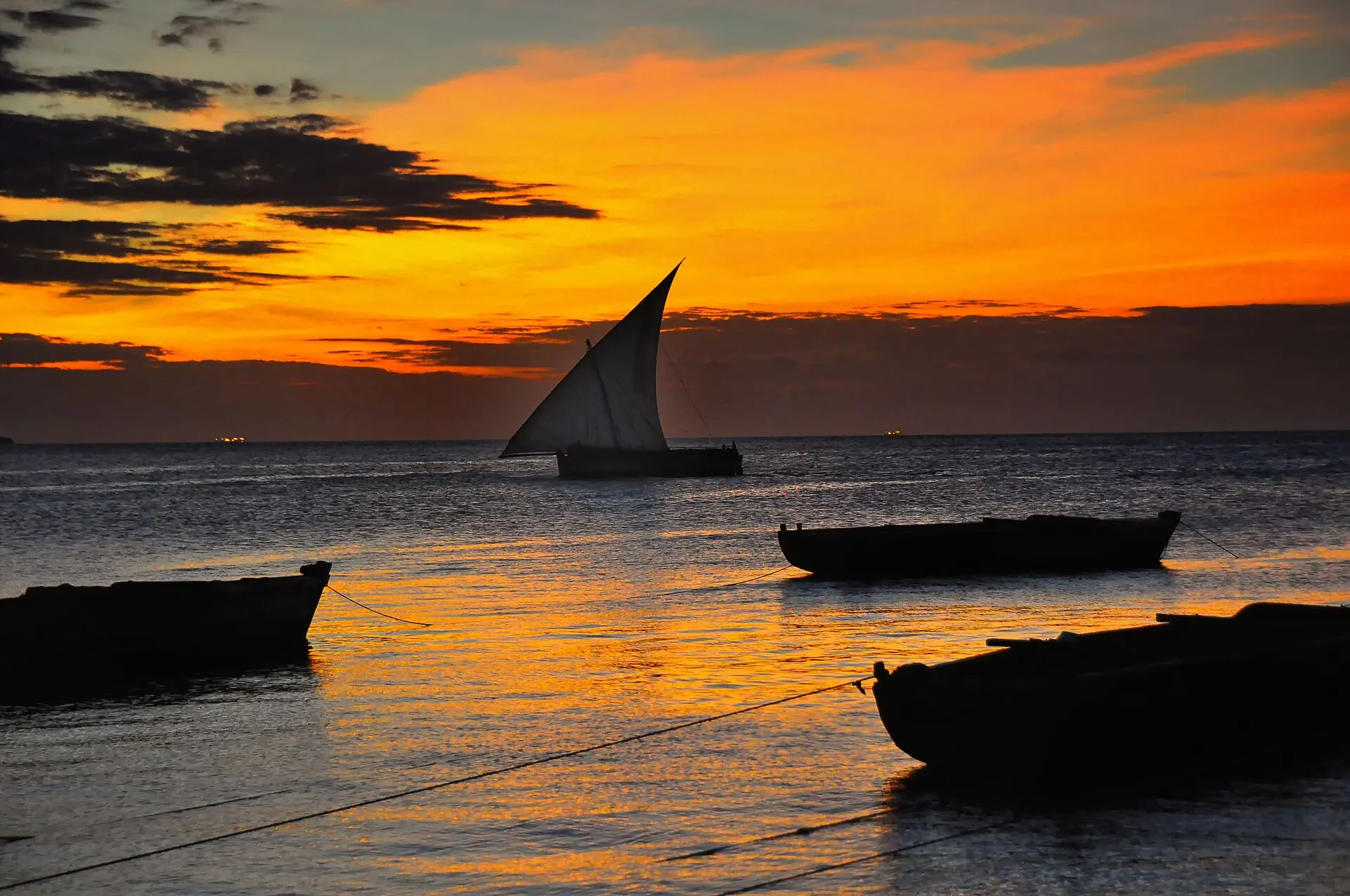
- Crossing to the island by small boat or dhow, as traders have done for centuries
- Quiet beaches, mangroves and good fishing around Kilwa Masoko
Things to do
- Guided walking tour of the Kilwa Kisiwani ruins with a local guide
- Boat trip to the Songo Mnara ruins
- Dhow sailing and sandbank trips in Kilwa Bay
- Snorkelling and beach time near Kilwa Masoko (conditions permitting)
- Visits to fishing villages and the mainland market at Kilwa Masoko
Planning your visit
- Best time to go
- The drier months, roughly June to October and late December to February, are the most comfortable for walking the ruins and for boat crossings. The long rains (roughly March to May) can make the southern road difficult and the sea choppy.
- Getting there
- Kilwa Masoko, on the mainland, is the base. It lies roughly 300 km south of Dar es Salaam on a surfaced road — typically a long half-day drive. Light aircraft also serve Kilwa Masoko from Dar es Salaam. From Kilwa Masoko the crossing to Kilwa Kisiwani is a short boat trip of around fifteen to thirty minutes, depending on the tide.
- Good to know
- A permit from the antiquities office in Kilwa Masoko is normally required before crossing to the ruins, and visits are made with a guide.
- Boat crossings depend on the tide, so the timing of your visit is set by the sea rather than the clock.
- There is almost no shade and no facilities on the island — bring water, sun protection and sturdy shoes for uneven ground.
- The ruins are fragile: stay on the paths your guide indicates and do not climb on or remove anything.
- Kilwa Kisiwani is a living village as well as a heritage site; ask before photographing people.
- Accommodation is in modest lodges around Kilwa Masoko rather than on the island itself.