

Kilimanjaro
Mount Meru
Tanzania’s second-highest mountain, and the finest warm-up for Kilimanjaro.
- Altitude
- Approximately 4,562 m at Socialist Peak, Tanzania’s second-highest summit
- Established
- Within Arusha National Park, protected from 1960
- Best for
- Acclimatisation before Kilimanjaro, and a quieter, steeper trek in its own right
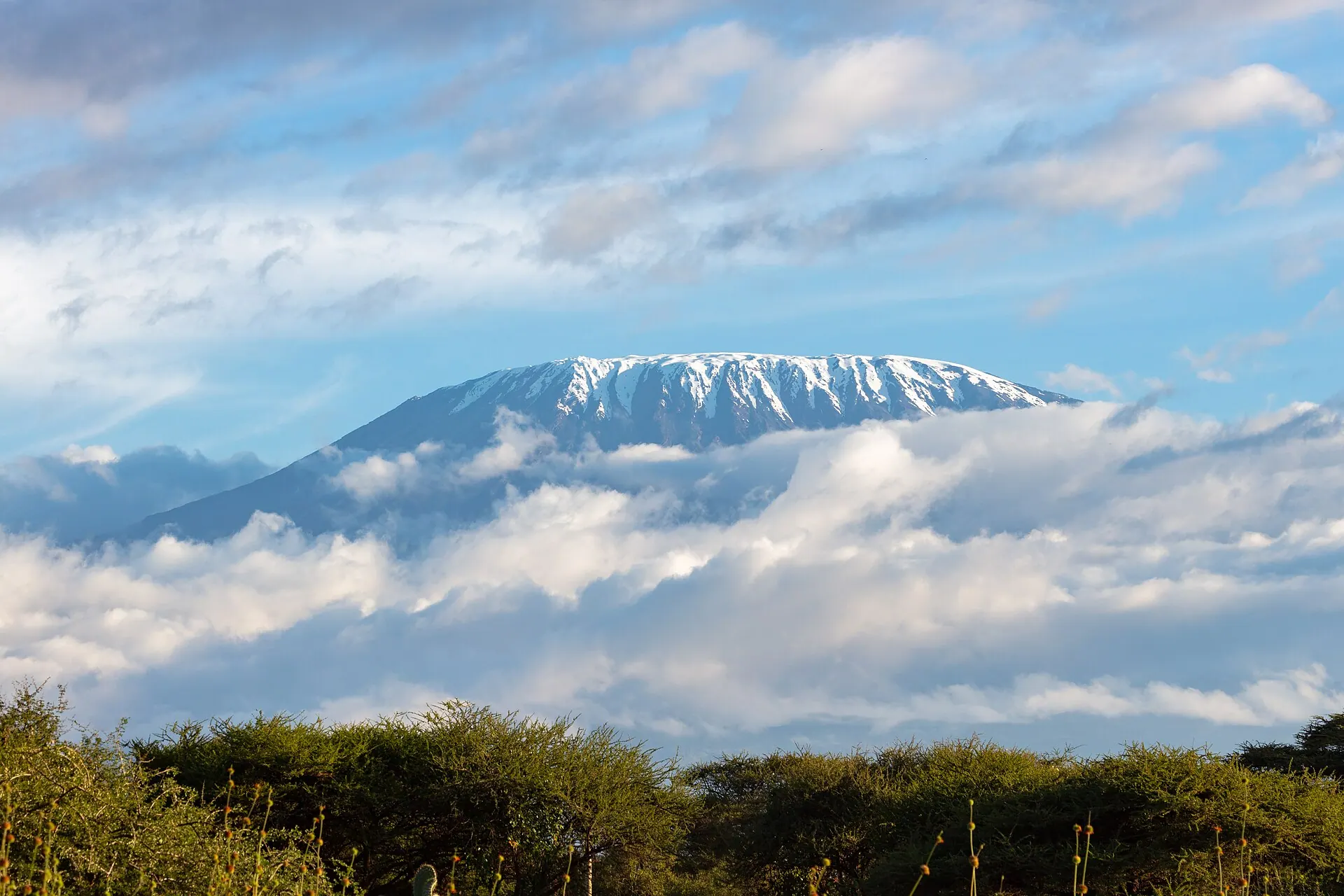
Mount Meru is a dormant volcano whose eastern side collapsed in a huge explosion, leaving a dramatic horseshoe-shaped crater with a sheer inner wall and an ash cone on the floor. The summit ridge curls around this crater, and the final section of the climb follows the rim itself — an exposed, spectacular walk with the ash cone below and, on a clear morning, Kilimanjaro floating above the clouds to the east.
The standard route is the Momella Route, usually walked over three or four days, with nights at Miriakamba Hut (approximately 2,500 m) and Saddle Hut (approximately 3,570 m). An extra day makes a real difference: it allows an afternoon acclimatisation walk to Little Meru and a more comfortable summit push, which typically starts around midnight in order to reach the top for sunrise.
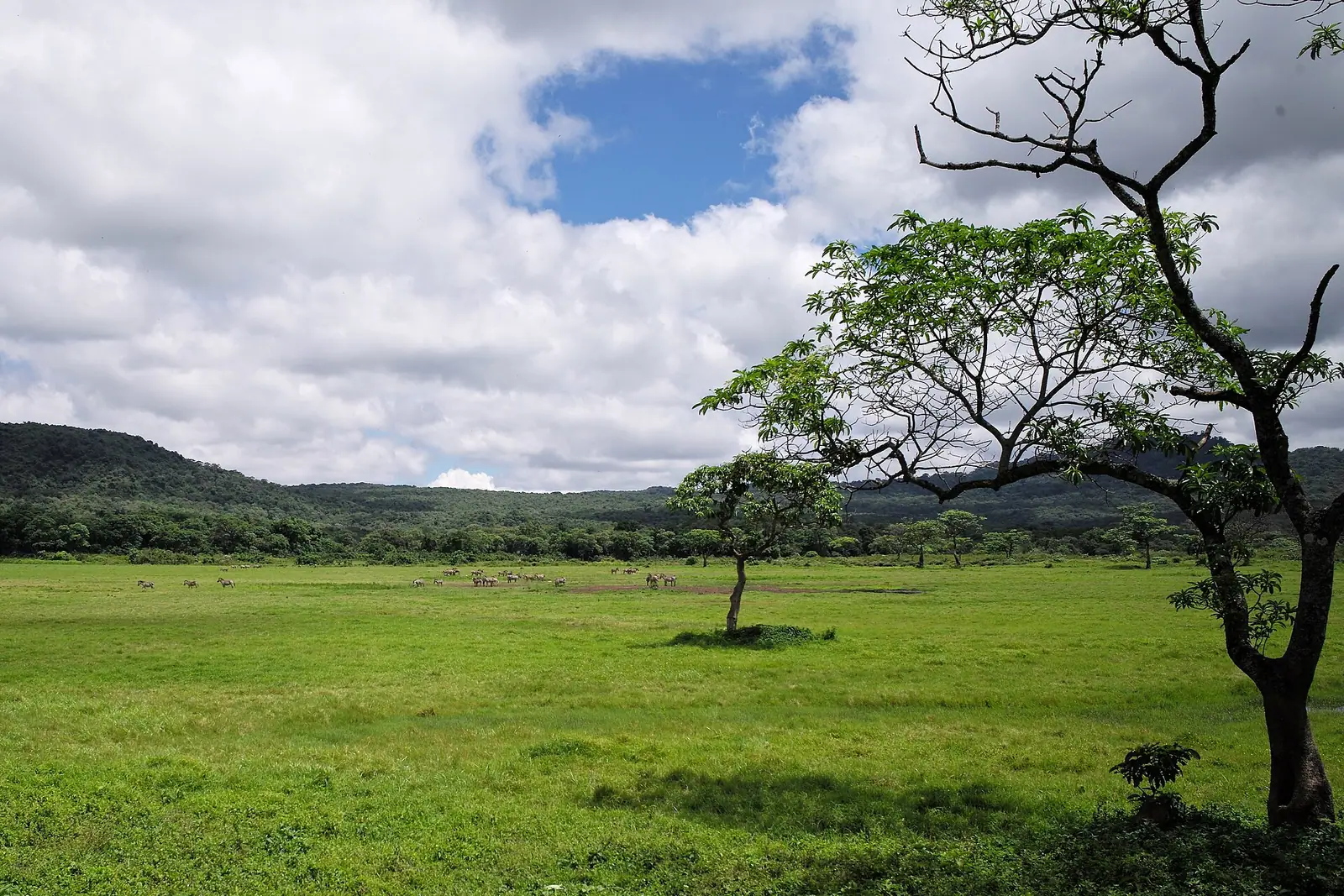
Because the route passes through Arusha National Park, every group walks with an armed park ranger, and the lower stages feel as much like a walking safari as a trek — giraffes, buffaloes, warthogs and colobus monkeys are regularly seen on the first day. Meru is steeper and rockier underfoot than Kilimanjaro and should not be underestimated, but climbing it roughly a week before a Kilimanjaro attempt is one of the best acclimatisation strategies there is.
Highlights
- Summit at approximately 4,562 m, the highest point in Arusha National Park
- Sunrise on the crater rim with Kilimanjaro on the horizon, weather permitting
- Walking through giraffe and buffalo country on the first day, with an armed ranger
- Excellent acclimatisation before a Kilimanjaro climb
- Hut accommodation at Miriakamba and Saddle Huts rather than camping
- Far fewer trekkers than on Kilimanjaro
Things to do
- Three-day Momella Route trek (Miriakamba – Saddle Hut – summit and descent)
- Four-day version with an extra acclimatisation day and the walk up Little Meru
- Sunrise summit push along the crater rim to Socialist Peak
- Short day hikes to Miriakamba and back, for those not climbing to the summit
- Wildlife and birdwatching on the forested lower slopes
Wildlife you might see
Wildlife is wild — these are the species people hope for here, never a promise.
- Maasai giraffe on the lower slopes
- Cape buffalo (keep your distance and follow the ranger’s instructions)
- Black-and-white colobus monkey in the forest zone
- Blue monkey and olive baboon
- Bushbuck and duiker
- Warthog on the open glades near Momella
- Augur buzzard and other raptors over the crater rim
Planning your visit
- Best time to go
- Roughly June to October and late December to February are generally driest and give the best chance of clear summit views. The long rains (roughly March to May) make the rock and roots slippery, and views are less reliable.
- Getting there
- The Momella Gate in Arusha National Park is typically about an hour and a quarter by road from Arusha, and roughly an hour and a half from Kilimanjaro International Airport (JRO). Treks usually begin with a morning transfer and registration at the gate.
- Good to know
- Every group is accompanied by an armed park ranger — this is a park rule, not an optional extra.
- The summit ridge is narrow and exposed in places, and the final section is done in the dark; a head torch and warm layers are essential.
- Meru is shorter than Kilimanjaro but steeper, and altitude sickness is still possible — go slowly and drink plenty.
- If you plan to use Meru as acclimatisation, allow a few rest days before starting Kilimanjaro.
- Travel insurance should cover trekking to approximately 5,000 m, including emergency evacuation.